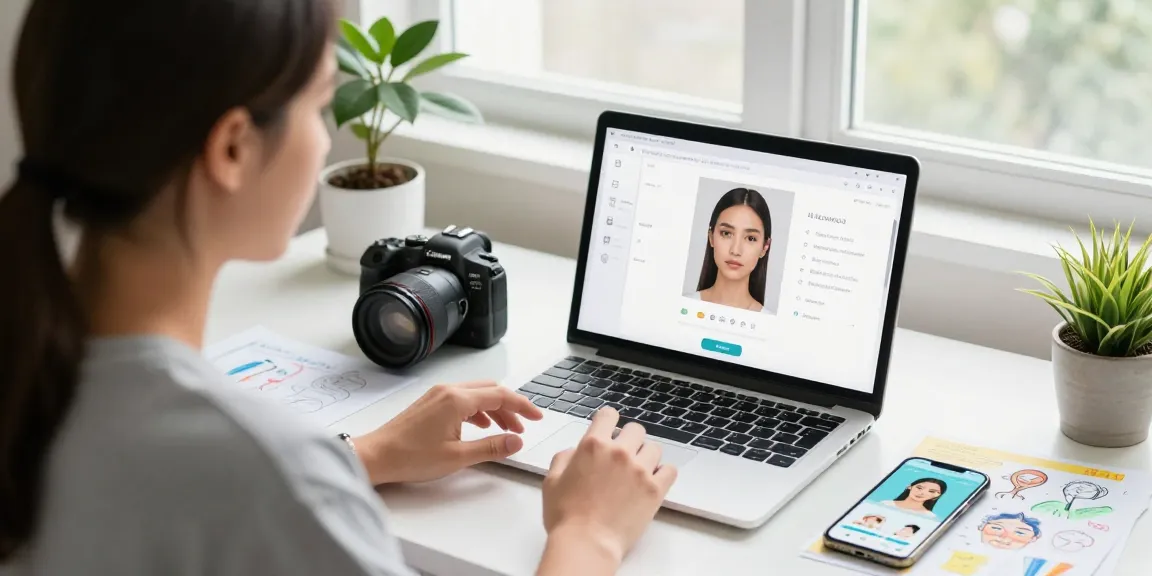
Understanding Facial Age Estimation Technologies
As technology continues to advance at an unprecedented pace, the methods we use to understand our own appearance are becoming increasingly sophisticated. Facial age estimation tools leverage artificial intelligence (AI) to provide insights into how old someone might appear based on their facial features. Many users today find themselves asking, "how old do I look?" when they want to gauge whether they appear younger or older than their actual age. These tools can be both fascinating and illuminating, offering a glimpse into the intersection of beauty, technology, and self-perception. For those curious about their own facial age, how old do I look tools provide a personalized experience that helps in understanding these technologies better.
What is AI Age Guessing?
AI age guessing is a cutting-edge technology that estimates a person's perceived age by analyzing various facial features. This process involves sophisticated algorithms trained on massive datasets containing images of diverse individuals. These models can recognize patterns associated with aging, such as skin texture, wrinkle depth, and facial structure. The primary goal is to deliver an accurate estimation of how old a person looks, which has applications in beauty, marketing, and even behavioral research.
How Accurate are Online Age Estimators?
While online age estimators can provide interesting and sometimes surprising results, their accuracy can vary significantly based on several factors. Most estimators are reasonably accurate for a general age range but may struggle with fine distinctions, particularly in individuals at the extremes of age. Factors affecting accuracy include:
- The quality of the input photo (lighting, resolution, angle).
- The specific algorithms and training data used by the estimator.
- Variations in facial features across different ethnicities.
Despite these limitations, many users find value in these estimators for entertainment and self-reflection.
Comparative Analysis with Traditional Methods
Before the advent of AI, traditional methods for estimating age relied on human judgment, dermatological assessments, and photographic analysis. While trained dermatologists could provide accurate assessments, these methods were often subjective and time-consuming. In contrast, AI age estimators offer immediate feedback, making them more accessible and user-friendly. However, the human element can add nuanced understanding that machines might miss, emphasizing the importance of blending both approaches for comprehensive insights.
User Experiences: Expectations vs. Reality
For many users, the experience of using facial age estimators can be both enlightening and confusing. Expectations often run high, fueled by the allure of technology promising definitive answers to personal inquiries about age perception. Yet, the reality can differ, leading to a range of responses from users.
Common Misconceptions About Age Estimation Tools
One common misconception is that these tools are infallible. Many users believe that an AI's assessment is factually accurate, but as we discussed earlier, various factors affect precision. Another misconception is that age estimators can provide insights into health or longevity based on appearance alone, which is a much more complex issue involving genetics and lifestyle factors.
Real User Testimonials and Outcomes
User experiences can vary widely. Some individuals report that the age estimators align closely with their perceived age, leading to satisfaction and affirmation of their self-image. Others, however, may feel disheartened if the tool suggests they look older than they feel or expect. Testimonials often highlight the fun aspect of the process while simultaneously acknowledging the limitations inherent in AI interpretations.
Factors Influencing User Perception
Personal factors, such as cultural attitudes towards aging and beauty standards, heavily influence how users perceive the results from these tools. Additionally, the context in which a user is engaging with the tool—whether out of curiosity, anticipation, or insecurity—plays a significant role in shaping their response to the outcome.
Best Practices for Using Age Estimators
To maximize the benefits of age estimation tools, users can follow some best practices that enhance the experience and accuracy of results. Proper understanding of the tools can lead to more satisfying encounters.
Tips for Optimal Photo Submission
When submitting photos for analysis, consider these tips:
- Use high-resolution images for clarity.
- Ensure proper lighting to avoid shadows.
- Avoid heavy makeup, as it can obscure natural features.
These simple measures can significantly improve the accuracy of age estimations.
Understanding Limitations and Privacy Concerns
Users should be aware that, like all technologies, facial age estimators have limitations. The algorithms may not account for variations in individual biology, and privacy concerns about the use of personal images are paramount. Users should always read the privacy policies of the platforms they use to understand how their photos will be stored and utilized.
Complementing Age Estimations with Skin Care Advice
While age estimators can provide a fun look at one’s appearance, they can also serve as a starting point for a deeper discussion about skincare and health. Tools that estimate age can be used alongside personalized skincare regimens to enhance overall appearance and well-being. By focusing on hydration, sun protection, and appropriate skincare products, users can work towards maintaining a healthy and youthful appearance.
Future Trends in Facial Age Technology
As we look towards the future, certain trends are likely to shape the landscape of facial age estimation technology. Innovations in AI and machine learning are expected to enhance the capabilities and accuracy of these tools significantly.
Emerging Technologies and Their Impact in 2026
By 2026, we can expect advancements in AI algorithms that take into account not just static images but also dynamic expressions and lifestyle factors. This integration could provide a more holistic view of age perception and health. Moreover, the development of augmented reality (AR) may create immersive experiences where users can witness virtual makeovers alongside age estimations.
Integrating AI with Personalization in Beauty
Future applications may also include more personalized beauty recommendations based on age estimation results. By analyzing individual skin profiles and age perceptions, brands could deliver tailored skincare solutions, thus enhancing the overall user experience.
Potential Ethical Considerations and Regulations
With the rise of AI comes the responsibility of ethical usage and regulation. The industry must navigate privacy concerns, potential biases in age estimation algorithms, and the psychological impact these tools can have on users. Stakeholders will need to work together to create frameworks that protect users while promoting innovation.
Frequently Asked Questions About Age Estimation
As interest in age estimation continues to grow, many questions arise. Here are some of the most frequently asked:
How does the AI determine my age?
The AI analyzes various facial features, including wrinkles, skin texture, and facial structure, to estimate age. It compares these features to those of a large dataset to generate a prediction.
Can I trust the results from online estimators?
While many tools offer reasonable estimations, they are not infallible. It's best to view the results as interesting insights rather than definitive conclusions.
What improvements can I make based on my age results?
Consider adopting a skincare routine focused on hydration, sun protection, and nourishing products tailored to your skin type. Age estimators can provide starting points for these conversations.
Are there any risks associated with using these tools?
Potential risks include privacy concerns regarding personal images and the psychological impact of receiving unexpected age evaluations. Users should be cautious and informed when engaging with these tools.
What is the best way to enhance my skincare routine?
Start with a fundamental regimen that includes cleansing, moisturizing, and protection from UV rays. Tailoring these practices according to the feedback from age estimators can optimize results and improve skin health.